Gatekeeping the Ecosystem
Platform governance and downstream competition in mobile software distribution
FAANG Antitrust Series
Episode 2
AppleThis is the second post in our EconWorks FAANG Antitrust Series.
In the first post, we examined how Google’s search distribution agreements may influence competition through default placement and behavioral usage patterns. This post turns to Apple’s App Store policies—and how platform governance may shape competition by controlling developer access to users.
Platform Governance as Conduct
Apple operates the sole authorized method through which third-party developers may distribute native apps on iOS devices.
To reach users, developers must:
Submit their apps for review
Comply with App Store guidelines
Use Apple’s in-app payment system for certain transactions
Pay commissions on digital purchases
Developers who fail to comply may face complete denial of access to the App Store.
In this way, Apple does not simply compete with developers—it governs the terms under which developers may compete on the platform.
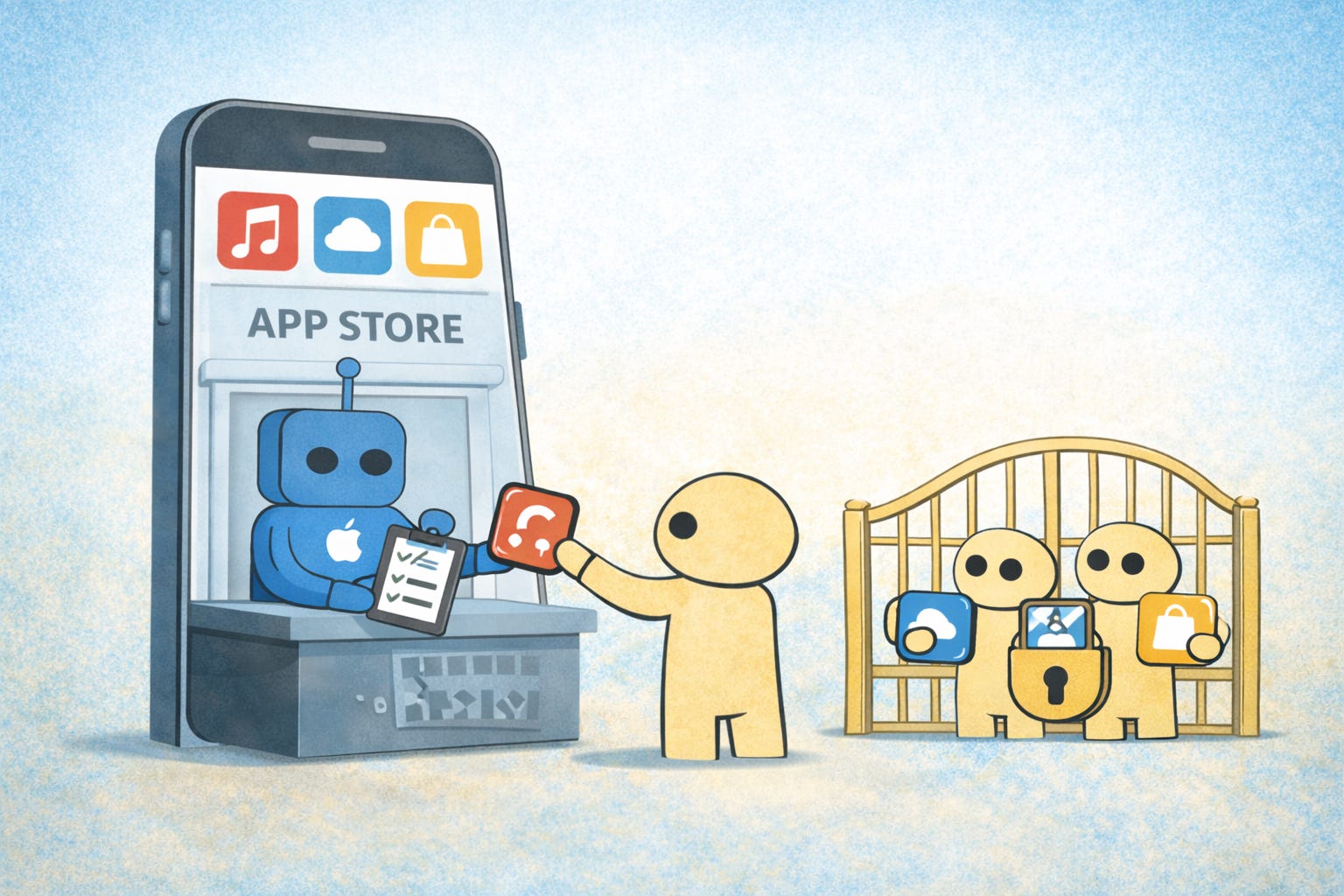
App Store policies may influence developer participation even before downstream competition among apps occurs (see Figure 1).

Developers must comply with App Store review processes, payment policies, and platform guidelines in order to distribute apps on iOS devices. These governance mechanisms may shape which developers gain access to users—and under what conditions.
From Governance to Competitive Outcomes
Apple also operates its own apps and services within the same ecosystem, including:
Music streaming
Video distribution
Payment services
Cloud storage
Developers offering competing services must distribute their apps through a platform controlled by a firm with downstream interests in those same markets.
Platform policies may influence competition not only through access decisions but also through the cost structures faced by participating developers (see Figure 2).
Commission requirements may increase developers’ marginal costs, potentially affecting optimal pricing strategies and the viability of entry for competing apps.
Platform policies may influence not only costs faced by developers but also the information available to users (see Figure 3).
Restrictions on developer communication regarding alternative purchasing mechanisms may limit user awareness of competing price options, potentially affecting demand for rival services.
Consumer Harm: Prices or Innovation?
Unlike traditional monopolization cases, the alleged harm in this context might arise through means other than higher prices for the platform itself.
Instead, concerns may focus on whether platform governance is adequate:
Limits developer competition
Slows innovation
Reduces consumer choice
Constrains pricing alternatives
Restrictions on interoperability may also increase switching costs faced by users considering alternative services (see Figure 4).
Platform limitations on interoperability may raise the cost of switching between competing services, potentially reinforcing user reliance on incumbent apps within the ecosystem.
Why This Case Matters
The litigation involving Apple raises a broader question:
Should platform operators be permitted to control not only access to users—but the terms under which competitors transact with them?
In digital ecosystems, competition may depend not only on product quality or price but also on the rules governing participation in the platform itself.
Next in the EconWorks FAANG Series:
Amazon’s Marketplace Ranking and the Allocation of Demand