What is “Surveillance Pricing”? US Laws, FTC Study, EU Comparison, Real Cases & Economic Effects
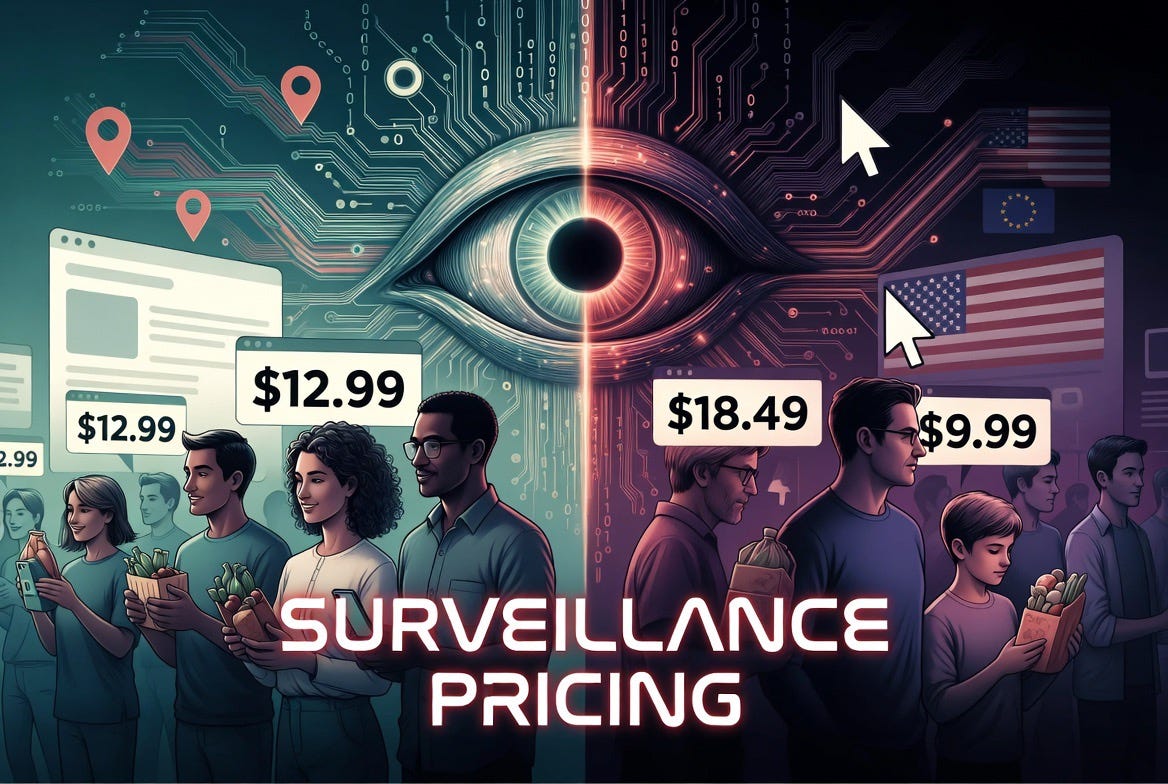
Ever paid more for the exact same grocery item or flight than someone else? That’s surveillance pricing (aka personalized/algorithmic pricing).
Companies use AI and your personal data — browsing history, location, device info, search habits, even battery level or mouse movements — to estimate your “willingness to pay” and charge you individually.
Changes in the US (April 2026)
There is no federal ban yet. The One Fair Price Act would make it illegal to use personal information to set prices for each person. Still in the committee.
New York leads: The Algorithmic Pricing Disclosure Act (effective Nov 2025) requires clear notice: “THIS PRICE WAS SET BY AN ALGORITHM USING YOUR PERSONAL DATA.” NY AG Letitia James is enforcing it with penalties of up to $1,000 per violation.
State action: Dozens of bills in 20+ states propose bans/restrictions (esp. groceries), including California, Pennsylvania, Arizona, and Maryland. Some add disclosure + opt-out.
The FTC Study (January 2025 Preliminary Findings)
In July 2024, the FTC launched a Section 6(b) study into the surveillance pricing ecosystem, issuing compulsory orders to eight intermediary companies (Mastercard, Revionics, Bloomreach, JPMorgan Chase, Task Software, PROS, Accenture, and McKinsey & Co.) that sell AI-powered pricing tools to retailers.
Methodology
The FTC used its Section 6(b) authority under the FTC Act for wide-ranging market studies. It issued formal orders requiring detailed written reports on the following:
Targeted Pricing Solutions and User Segmentation Solutions (tools that set/adjust prices, quantity, or availability based on consumer data).
Types of products/services, technical implementation, data sources/collection methods, customer base, and potential consumer impacts.
The January 2025 staff research summaries analyzed documents from six respondents (July–December 2024). Information is aggregated/anonymized to protect trade secrets. The summaries are preliminary, with noted limitations (not fully representative; study deprioritized under new leadership; no full final report yet).
Key Findings
Wide use of personal data: location, demographics, browsing/purchase history, mouse movements, abandoned carts, inferred traits (e.g., new parent status).
Real-time individualized pricing, segmentation, adjusted discounts/availability, and product rankings.
Intermediaries serve at least 250 clients across groceries, apparel, etc.
Claimed revenue boosts: 2–5% (or 1–4% margin increases).
Comparison to EU Studies & Approach
While the US FTC study is a targeted 6(b) investigation focused on intermediary pricing tools, data sources, and claimed business benefits (with emphasis on the opaque market and consumer fairness/privacy), the EU has taken a broader, more integrated regulatory lens:
Key EU studies & their methodologies
2018 European Commission Consumer Market Study (largest empirical work): Combined (1) an EU-wide online consumer survey; (2) mystery shopping on 160 e-commerce sites across 8 Member States (CZ, DE, ES, FR, PL, RO, SE, UK) in 4 sectors (TVs, shoes, hotels, airline tickets)—717 evaluations by 254 shoppers using standardized “personalised” vs. anonymized/VPN control browsers; and (3) a behavioral experiment. It found no consistent systematic personalized pricing (small/occasional differences, especially in travel), but widespread personalized ranking of offers.
2022 European Parliament Study ("Personalized Pricing” by Rott, Strycharz, and Alleweldt): Primarily a desk-based review—conceptual analysis of pricing types, synthesis of existing empirical evidence (including the 2018 study), consumer attitude surveys from literature, and detailed legal gap analysis under EU consumer, competition, and data pro The IMCO committee requested this, and no new primary data collection is planned. a collection.
BEUC (consumer org) reports (e.g., 2023 position paper): Draw on the above plus targeted consumer surveys (e.g., 2023 polling across 8 member states showing ~40% discomfort with the practice) and advocacy-focused legal/economic reviews.
Methodological differences: EU studies lean on mystery shopping, large-scale surveys, behavioral experiments, and literature reviews (real-world testing + consumer perceptions) rather than compulsory company orders. They integrate competition law (algorithmic collusion risks), consumer protection, and GDPR (profiling/transparency/consent rules) more tightly.
Ongoing national probes (e.g., Dutch/Italian airline algorithmic pricing) and confidential EC investigations continue this evidence-gathering.
Regulatory contrast:
EU: Ex-ante rules via GDPR (automated decisions), Consumer Rights Directive (personalized pricing disclosure since 2019), and Unfair Commercial Practices Directive. The upcoming Digital Fairness Act (expected draft 2026) targets unfair personalization/dynamic pricing more comprehensively.
US: More fragmented, ex-post/state-driven.
Both note consumer backlash risks and mixed welfare effects, but the EU embeds data protection more deeply.
US Cases & Enforcement
• Instacart spotlight: The 2025 Consumer Reports/Groundwork study showed up to 23% higher prices for the same cart. Instacart paused AI experiments amid backlash. The NY AG demanded disclosure compliance; the FTC issued an investigative demand; the House Oversight inquired.
• Lawsuits & challenges: Retail groups challenged NY’s law (dismissed). More litigation expected.
Economic Effects of Potential Bans
Pro-ban side:
Greater transparency, fairness, and trust. Reduces hidden exploitation and excessive data collection.
Economist cautions:
Uniform pricing can raise average prices or reduce access for price-sensitive buyers (perfect price discrimination often maximizes total output).
Risks losing beneficial targeted discounts/loyalty deals.
Retailers may shift to higher base prices or cut efficiency innovations. Net effects are mixed.
Data on full bans remains limited, but cases like Instacart show clear reputational risks.
Should the US prioritize federal disclosure (like NY), pursue bans, or learn from the EU’s integrated GDPR + transparency model? Have you seen big price differences for the same items online?